01
React component architecture
Composition rules, server and client component boundaries, and props designed for the fact that components are edited far more often than they are written.
For teams who own their backend and need the front end built properly: React architecture, a design system your engineers extend, and rendering decided per route. Full-build engagements live on app development and website development.
Composition rules, server and client component boundaries, and props designed for the fact that components are edited far more often than they are written.
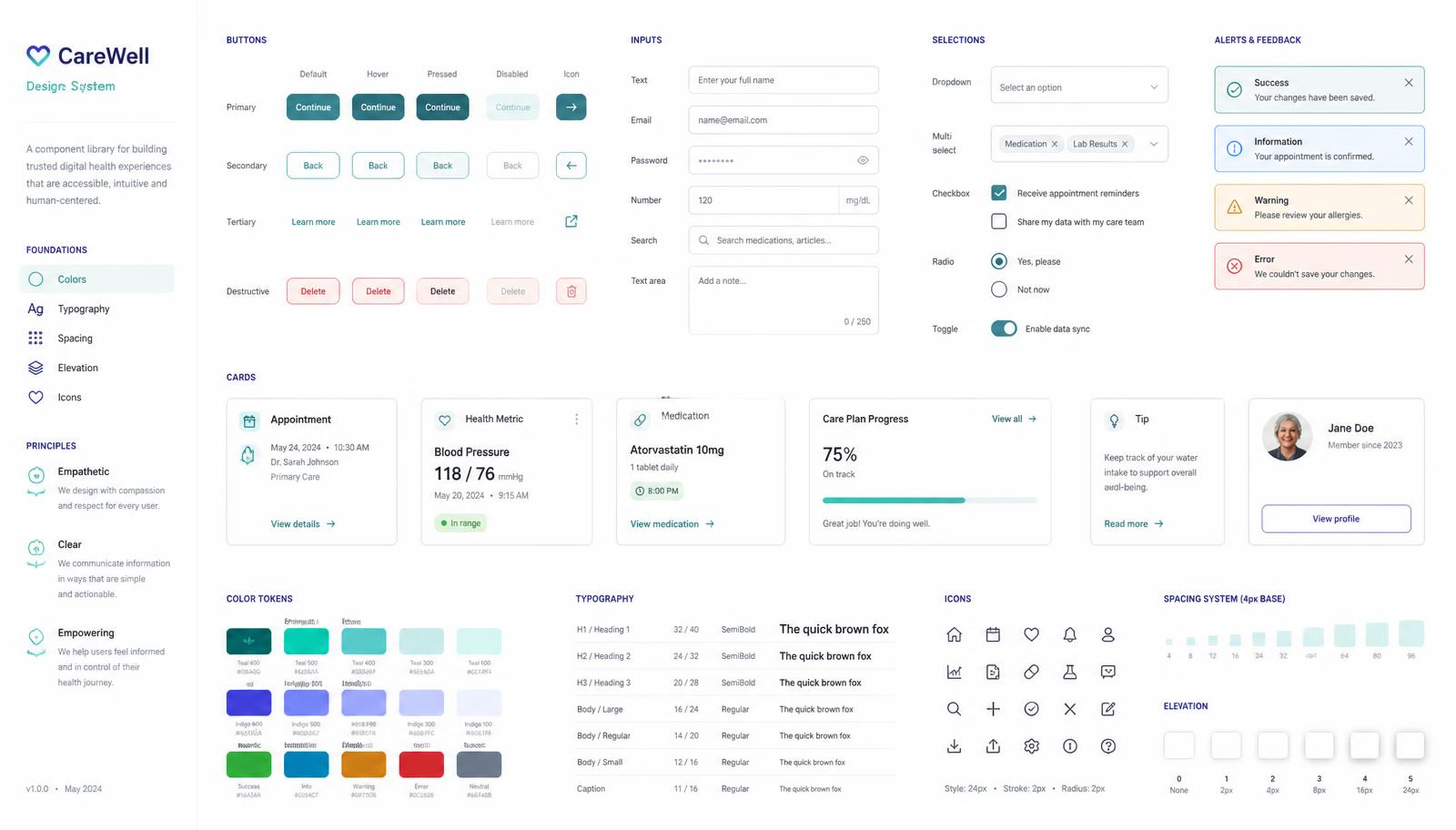
Token architecture and headless primitives built from your design language, documented so your team ships new patterns without asking us.
Per-route decisions on static generation, incremental revalidation and request-time rendering, chosen against cache behaviour rather than habit.
WCAG 2.2 AA conformance work, and route-by-route migrations off legacy single-page apps that keep the product shippable throughout.
A one-week diagnostic reads the existing front end, then we agree the smallest sequence of changes that makes the codebase pleasant again. Rates and scope sit on the pricing page, and the studio page explains who does the work.

Yes. A common shape is us owning the front-end architecture and design system while your engineers own product features, with shared review standards so the codebase reads as one voice.
We do, and we prefer it. We will ask for tokens, states and edge cases up front, then flag anywhere a design conflicts with accessibility or the performance budget before building it.
The practice is Next.js and React, so React-only front-ends are in scope. What we do not do is quietly rewrite a working stack — if Next.js is not the right answer for your case we will say so on the call.
Send the repository, the designs, or the list of things that slow your team down. We will tell you what we would fix first.