NEXT.JS APP
DEVELOPMENT
SERVICES.
Products, not pages. Dashboards, SaaS interfaces and operational consoles where state complexity is the actual work — the kind of build documented in the portfolio.
An application fails slowly: a data layer that leaks, a route tree nobody can reason about, a table that dies at 20,000 rows. We fix the order of decisions — architecture, data boundaries, then interface — so the third year of the product is cheaper than the first.
If what you need is a marketing or content site, read website development instead.
APPLICATIONS WE BUILD.
SaaS products
Multi-tenant applications with billing, roles and onboarding paths that survive the second and third pricing change.
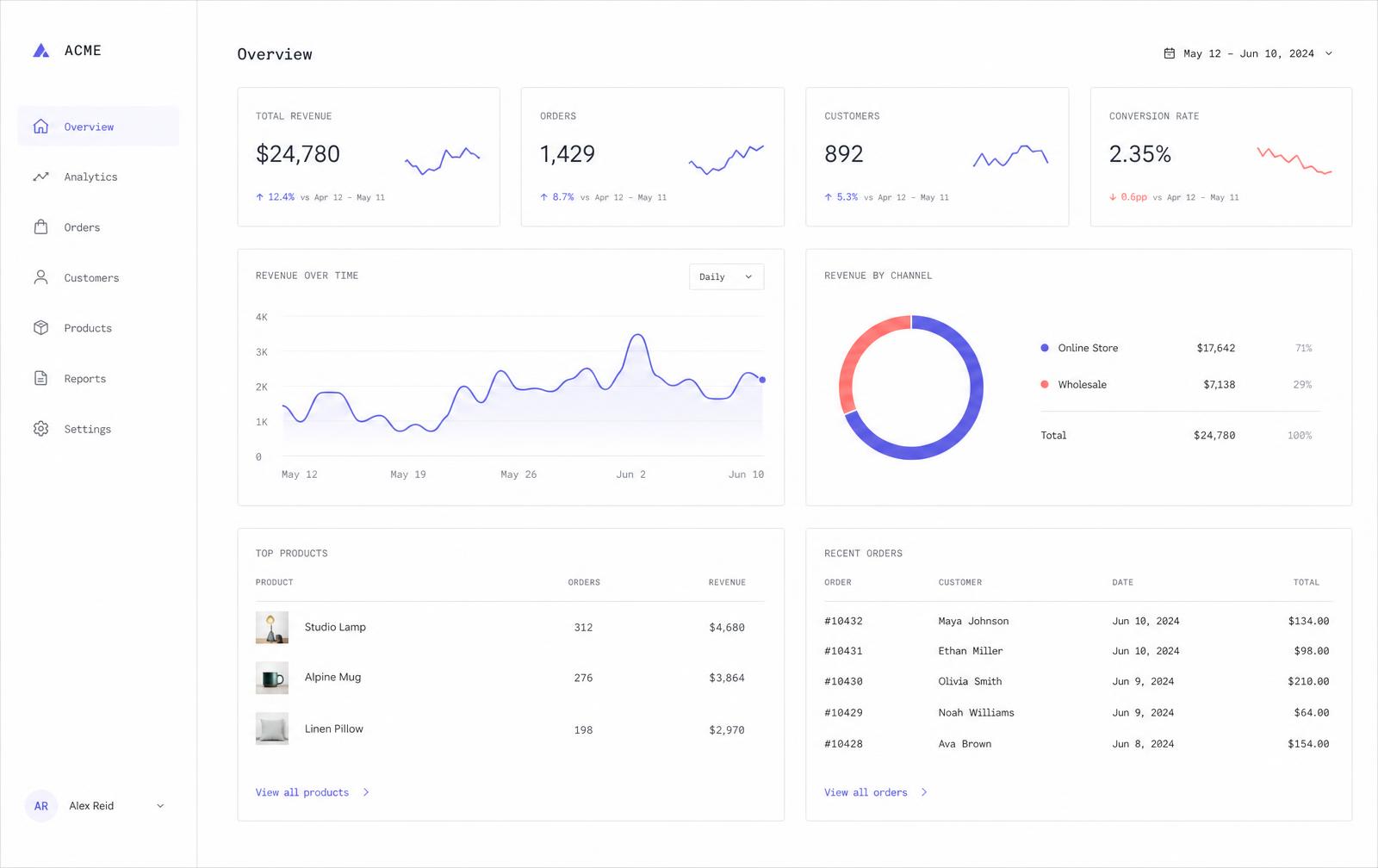
Customer dashboards
Data-dense surfaces with virtualised tables, saved views and charts that stay responsive at tens of thousands of rows.
Internal and admin portals
Operations tooling where correctness beats polish: audit trails, permissioned actions, bulk edits, predictable failure states.
Realtime and collaborative consoles
Editors, canvases and monitoring consoles using explicit state machines, optimistic mutations and a sync layer that reconciles conflicts.
THE ENGINEERING UNDERNEATH.
Every application engagement starts with a one-week diagnostic and ends with a handover your team can act on. The service hub lists what each phase includes.
Application architecture
Route topology, server and client boundaries, cache behaviour and a typed data layer, all agreed in writing before the first screen is built.
API and service integration
Server-side data access with validated inputs, predictable error shapes and retries, so third-party outages degrade the feature instead of the app.
Authentication and access control
Server-verified sessions, roles held apart from profile data, and permission checks covered by tests rather than trust.
Interfaces under load
Virtualised rendering, optimistic mutations and explicit state machines, verified with load and soak tests before launch rather than after.

QUESTIONS.
Do you work on an existing application or only greenfield?
Both. On an existing codebase we start with a read-only review of routing, data flow and rendering, then agree an incremental plan — usually route by route, so the app stays shippable throughout.
How do you handle authentication and permissions?
Sessions verified server-side, roles stored separately from user profiles, and every privileged action checked on the server rather than hidden in the UI. Permission rules are written as tests.
Who owns the code and the deployment?
You do, from the first commit. We work in your repository, on your infrastructure, and finish with a runbook and handover sessions so your engineers can extend the app without us.
BUILD YOUR
APPLICATION.
Bring the product problem and whatever exists today. You will leave the call with a scope, a sequence and a number.